"I certainly never write a review about a book I don't think worth reviewing, a flat-out bad book, unless it's an enormously fashionable bad book." --
says, John Gardner in Conversations with John Gardner
Quoted from 'Dictionary of Library and Information Science Quotations'     Edited by Mohamed Taher & L S Ramaiah. ISBN: 8185689423 (New Delhi , Aditya, 1994) p.150. Available @ Amazon.com
Showing posts with label Philosophy. Show all posts

Thursday, January 21, 2010

Best Book Review: The Eternal Present Tense by Dr. Ziauddin Sardar

Book Review: The best and the worst at a glance:
The Worst:
I stumbled on a blog that presents awards if you have "The Worst Review Ever." And, today by surfing the Web, read one of the best reviews, by Dr. Ziauddin Sardar. [information courtesy: NewAgeIslam.Com]

To qualify what makes a 'worst review ever,' I have no choice to determine nor options to rate. Read the qualifications: 'BE A WORSTIE!' @ The Worst Review Ever. In addition, there are many blogs / sites that present: Best review EVER or Best * Worst book reviews or here. More on " best book review" is here

The Best:
And, to judge the best, one can look for best practices drawn by experts. A review is best if it has: (a) balanced perspective (visualizes strength, weakness, and commends), (b) presents a glimpse of what the book has as compared to the competitors in the market (with internal citation and external comparison), and (c) the reviewer knows the subject in-and-out (not just a superficial knowledge). All of this and much more is [in The Guardian, dated Saturday 21 June 2008)] Dr. Ziauddin Sardar's review of The Qur'an: A New Translation, by Tarif Khalidi, 'The eternal present tense':
"We look for two things in any new translation of the Qur'an. How close does it get to communicating the meaning of the original, that inimitable oral text, the very sounds of which move men and women to tears and ecstasy? And does it offer something more: a new perspective, perhaps; or an innovative rendering?
Tarif Khalidi, a professor of Islamic studies at the American University of Beirut, scores high on both these criteria. He manages to capture the allusiveness of the text, as well as something of its tone and texture. While being faithful to the original, he succeeds in conveying linguistic shifts, from narrative to mnemonic, sermons to parables. And there is an innovative component: it is the first translation that tries to capture both the rhythms and the structure of the Qur'an.
The best way to demonstrate its newness, and how close it is to the original text, is to compare it with an old translation...

Khalidi wants the reader to enjoy the experience of reading the Qur'an. Of course, he wants to communicate the majesty of its language, the beauty of its style, and the "eternal present tense" of its grammar. But he also wants the reader to appreciate the Qur'an's unique structure, how the language changes with the subject matter, how it swirls around and makes rhythmic connections. He wishes to show how each of the seven tropes of the Qur'an (command, prohibition, glad tidings, warnings, sermons, parables and narratives) registers a change in the style of its language. A lofty ambition, but one he pulls off with some success....
Continue reading The Eternal Present Tense
On the same shelf books by Dr. Ziauddin Sardar:

Saturday, January 09, 2010

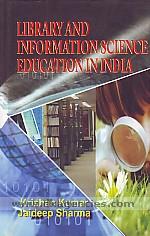
Reading now: Library and Information Science Education in India

Library and Information Science Education in India, by Krishan Kumar and Jaideep Sharma. New Delhi, Har-Anand Publications Pvt. Ltd. 2009. ISBN: 8124114650; US$ 33.00; 312 p.
“LIS Education is the most crucial input for the development of libraries. … The book has been primarily written to meet the needs of the researchers of Library and Information Science. It will also serve as a basic source for students of LIS for the course of LIS Education both at M. Phil and MLIS levels.” (cover)
Contents: Chapter: I. History; II Organizations and their role; III. Levels of courses; IV. Admission requirements; V. Course content; VI. Course Delivery : teaching methods tools and evaluation; VII. Infrastructure; VIII. Status and accreditation; IX. Distance education; X. Issues, developments trends and suggestions
Professors Krishan Kumar and Jaideep Sharma have done an excellent job of cataloguing the main facets of LIS education in India. The authors have been directly involved in teaching, training and are personally exposed to the tools, techniques, methods and out-come of LIS programs in India. Both have a good grasp of what is imported and what is exported by LIS professionals and have a balanced approach about how much of thinking local and acting global is essential today—especially introduction of the book reflects this perspective of what works abroad and what works in India. For instance, the recent growth of I schools in California and Mysore will interest many LIS educationists to see the synchronization that is taking place (I-School movement, p. 57).

Library and Information Science Education in India is a handy source for researchers, post-graduates, as well as for an advanced study of LIS education in India as it evolves. This book is also useful for those interested in comparative education, comparative and international librarianship as well as historiography of library world. Library historians, in short, will find this book indispensable.

Full review will appear in Library Times International

On the same shelf:
  • Diversity and Commonality of Information Science Education in a Pluralistic World (SIG ED) by Ingrid Hsieh-Yee, Heting Chu, Joseph Janes, Eileen Abels, William Moen, Samantha Hastings
  • Stakeholder's Views on Information Education by Rachel Elkington, Cynthia Fugate, Deanna Morrow Hall, Mark Greene
  • Fifty years of library and information science education in India: Seminar papers: XV IATLIS National Seminar, Department of Studies in Library and Information ... of Mysore, Mysore, 27-29 November 1997
  • Another graduate school serving the library field is about to lose the “L” name
  • Libraries in India - National Developmental Perspectives: A saga of Fifty years since independence, by Mohamed Taher. New Delhi , Concept Publishing, 2001.
  • Friday, July 04, 2008

    Dante Alighieri's The Divine Comedy

    This is not a review, it is just an aggregation of some content.


    Dante.Inferno.Canto I:


    Info courtesy: Dante Explorer:
    Dante Explorer is a journey through the afterlife of Inferno, Purgatory, and Paradise with the poet Dante in his work, The Divine Comedy.

    Why would I want to read Dante today? Here are 10 reasons to read Dante

    New to Dante? A Beginners guide to Dante

    Ready to start the journey? Begin the Journey - Inferno

    Dante Explorer is updated regularly, please check back often at the: Dante Explorer Blog for the most current post, or subscribe to the RSS feed at the top of the page.

    Tuesday, September 18, 2007

    36 Blog Rules to Keep You in Business


    If ou are a corporate blogger or interested in what works in blogsphere, you have Nancy Flynn's excellent book that tells you have far, how much and how deep should you go, and more so what are the boundaries that you should be aware. [Info courtesy: Microsoft Momentum, June 2007: 7]

    BLOG RULES: A Business Guide to Managing Policy, Public Relations, and Legal Issues by Nancy Flynn (AMACOM Books, 2006)
    Here are some rules to keep you and your business in business and out of court.
    Blog Rule #1: The blog is an electronic communications powerhouse.
    Blog Rule #2: Business blogs are not necessary or appropriate for every organization.
    Blog Rule #3: Savvy business owners and executives must learn how to strategically and successfully manage the blogosphere today.
    Blog Rule #4: It’s the casual, conversational, anything-goes nature of the blog that makes it both so appealing to blog writers and readers.
    Blog Rule #5: An organization without an external blog program may risk losing position, market share, reputation, and sales to tech-savvy competitors.
    Blog Rule #6: The strategic management of blogs or any other electronic business communications tool begins with the establishment of written rules and policies governing usage and content.
    Blog Rule #7: A business blog opens the organization up to potential disasters.
    Blog Rule #8: Management, technology, and the legal system have not yet caught up with the potential benefits and risks of business blogging.
    Blog Rule #9: Strategic blog management begins with the establishment of a clear objective.
    Blog Rule #10: Don’t allow IT (or legal, records management, or human resources) to dictate your business blog program.
    Blog Rule #11: Require employees to sign a confidentiality agreement to protect trade secrets and confidential data belonging to the organization, employees, customers, business partners, and other third parties.
    Blog Rule #12: Use discipline to maximize employee compliance with blog rules, policies, and procedures. continue reading Blog Rule # 13 - 36

    From The Critics
    Business Times (New Haven, CT):
    Blog Rules is the one guide readers need to help ensure that their organizations are helped and not hindered by this revolutionary tool.
    Niche Magazine:
    Since the rules about business relationships and blogs can be hazy, Nancy Flynn has written an essential guide..
    Library Journal:
    Flynn's book... is more strictly for CEOs fearful of blogging. [continue reading these critical notes at bn.com]

    Table of Contents (sample, see full list at bn.com)
    Ch. 1 Why blog rules? 3
    Ch. 2 Blogs pose unprecedented risks to business 13
    Ch. 3 Start with a clear objective : why blog? 20
    Ch. 4 Proceed with caution : self-assessment for would-be business bloggers 26
    Ch. 5 Treat blog posts as business records 39

    Friday, August 24, 2007

    How to tell what I am, or What to Write Using a Life Story Template

    Wonder if there is a topic more significant, compelling, or familiar to us than our own life stories as we have lived? Believe it or not, I picked up Victoria Ryce's By me, About me, in a store, and felt that this is a perfect subject that would inspire us to spell many tiny little moments that we have lived.

    Moreover, this book with its templates* to write every little bit, helps ANYONE desirous of doing all-of-the-above. It also helps those who are interested in any of the following areas, such as, developing writing skills, dig the creative insights, externalize the moments to show and tell what you are, in fact. Call it autobiography or showing your true colors, to say: I am real and experienced, as well."

    In short, here is an opportunity. Answer what YOU want to answer using this book's templates. There are 140+ questions at your fingertips.

    *The book is full of templates or blank pages for you to fill, each page offers a question (aka clue to whatever details you could possibly add), such as:
  • My name, or names, and how I came to be called that (in the chapter: Childhood and family adventures)
  • The best boss I ever had and the worst one (in the chapter: Life as an adult)
  • The role spirituality has played in my life (in the chapter: Views of the world)
  • The saddest day in my life (in the chapter: The inner self)...

  • About the author: Victoria Ryce is a caregiver based in Picton, ON. She is also the author of Marketwise
    . And the book By me, About me is published by Raincoast Books--Raincoast Books is the Canadian publisher of the Harry Potter series by JK Rowling.